How to trade meme coins without losing your deposit to emotions and rugs
Want articles like this for your own video to promote it on YouTube and Google? Order them through the Telegram bot @sat_sit_bot. Articles with your video embedded are written and posted by the bot itself — on popular topical sites (no ads). Your first 50 articles are free.
· based on the channel rasmr
Key takeaways
- Meme coin price is driven by narrative and liquidity, not by fundamentals: the same chart pattern means nothing without knowing who launched the token and why.
- Emotions are the main account killer: greed on a 50–100% gain and hope on a losing position turn a profitable trade into a round trip to zero.
- Position sizing comes first: risk only capital you can lose entirely, because a rug pull can remove 100% of the position in minutes.
- Exit in tranches: sell part of the stack into strength instead of waiting for a single perfect top that almost never comes.
- Unrealized profit is not money: a million in paper gains means nothing until it is sold and sitting in stablecoins.
Meme coins are the most narrative-driven segment of crypto, and the working approach is to trade them as a high-risk speculation: define the narrative and the launch source first, size the position so a full loss is survivable, and exit in tranches instead of hoping for one perfect top. Everything else — chart patterns, indicators, community hype — is secondary to those three rules. The breakdown below follows the logic of the «5 Years of Memecoin Knowledge in 12 Minutes» video by the rasmr channel, and if you want to trade alongside it, registration via the fomo.family referral link gives you access to the same terminal.
What actually moves a meme coin price
A meme coin has no cash flow, no earnings and no product roadmap that can be valued, so its price is set by attention and liquidity. That is why the first question is never «what does the chart look like» but «who launched this token and what story is it selling». A ticker built around a viral event, a celebrity, a political moment or an AI narrative can absorb tens of millions in volume within hours, while a technically identical token with no story dies at a few hundred thousand in market cap.
The practical implications are simple:
- Identify the narrative before entering — a launch tied to a trending topic has a buyer pool; a launch with no story has none.
- Check where the token was announced. Coins that reach a narrow circle of connected traders before public launch tend to be distributed to that circle first, and the public buys their exit liquidity.
- Look at market cap, not price per coin. A token at $0.000001 with a $50M cap is more expensive than one at $0.02 with a $5M cap.
- Watch liquidity depth: thin pools mean your own sell order can crash the price by 30–50%.
Why emotions destroy meme coin accounts
The single most repeated lesson in the space is that emotional trading loses money, and the numbers behind it are boring and consistent. Traders buy because a chart is going up, hold a loser hoping it comes back, and sell a winner too early or too late — all three are the same mistake: reacting to price instead of following a plan written before entry.
The classic pattern looks like this: a position goes up 50–100%, the trader feels smart and adds size at the top, the token retraces 40%, the trader refuses to sell at a loss, and the whole gain round-trips to zero. The opposite failure is equally common — cutting a winner at plus 15% and then watching it do 10x, which trains the trader to hold the next one forever, right into the rug.
A workable countermeasure is to write down three numbers before buying: the invalidation level where the thesis is dead, the first profit-taking level, and the maximum share of the portfolio this position may occupy. Once those exist, the decision is mechanical rather than emotional.
A step-by-step checklist before buying any meme coin
A meme coin purchase is a sequence of checks, not a single click. Running the same checklist every time removes most of the impulse decisions that cost money.
- Narrative check. Can you explain in one sentence why strangers would buy this token this week? If not, skip it.
- Launch source. Find who deployed the contract and where it was first announced. Anonymous launches with a concentrated early distribution are a warning, not a feature.
- Holder distribution. A handful of wallets holding a large share of supply can dump on you at any moment; check the top holders and whether they are linked.
- Liquidity and contract. Confirm the pool is locked or burned, check for mint and freeze functions, and verify the token is not a copy of a copy.
- Position size. Decide the amount you are fully prepared to lose. For most traders this is a small percentage of the portfolio, not the whole stack.
- Exit plan. Set the levels where you sell a third, a half, the rest — and the level where you accept the loss and walk away.
How to take profit and avoid round-tripping gains
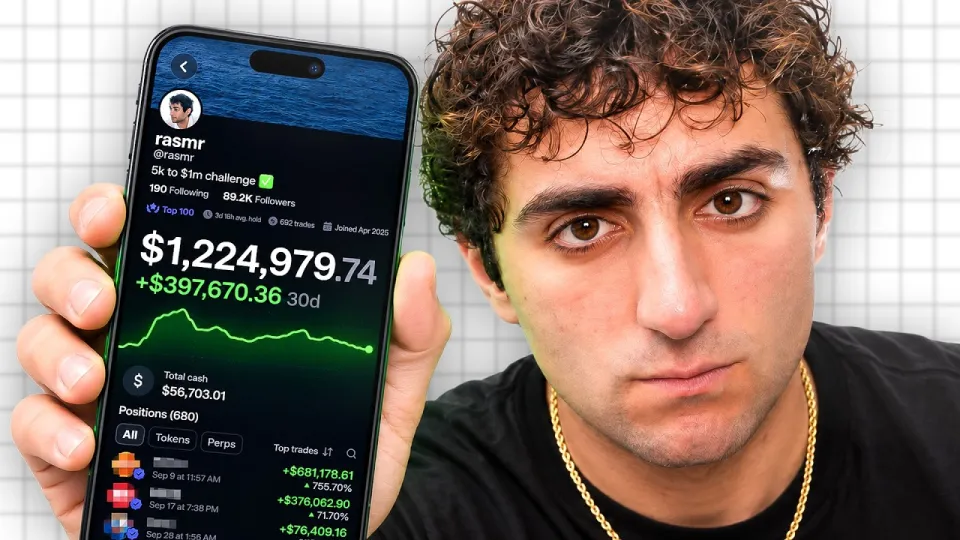
Profit only exists after you sell, and the most expensive illusion in meme coins is the screenshot of an unrealized million. A position can show seven figures on screen and be worth a fraction of that the moment the first large seller hits the bid, because liquidity is thin and exits crowd into the same door.
The practical rule is to scale out into strength. Sell a portion when the position doubles, another portion when the narrative peaks in visibility, and keep a small runner only with money you have already mentally written off. If the token is up 100% and you have not sold anything, you are not an investor — you are a holder of a lottery ticket that has already been drawn.
Equally important is accepting losses fast. A meme coin that breaks its launch structure usually does not recover; averaging down into a dead narrative converts a small planned loss into a large unplanned one.
Common questions and misconceptions about meme coin trading
Most doubts around meme coins repeat the same few themes, and each has a short answer. «Can I start with small capital?» Yes — starting small is the correct approach, because the skills that matter are process and discipline, and they scale; a large account with no plan simply loses more. «What about coins built on a big upcoming event, like a game release?» An event-driven token can work as a narrative trade, but the crowd usually buys the rumor and sells the news, so the exit matters more than the entry. «Why do people say the inner circle always wins?» Because coordinated groups see launches before the public and buy the earliest, cheapest supply — which is exactly why you should never treat a public launch as an early entry. «Is technical analysis useless here?» Not useless, but subordinate: on a token with no narrative and no liquidity, the prettiest chart is a trap.
Risk management rules that survive a rug pull
A rug pull is not an edge case in meme coins; it is a standard risk that must be priced in before every trade. The mechanics are usually the same: a developer or a small group holds a large supply, liquidity is unlocked or the contract has a hidden function, and the exit happens in a single transaction while the chart still looks healthy.
The defensive rules are unglamorous but effective: never put more into one meme coin than you can lose completely; avoid tokens whose top wallets hold a dominant share of supply; prefer launches with locked or burned liquidity; keep most of the portfolio in stablecoins or major assets and treat meme coins as a satellite allocation; and withdraw profits to stablecoins rather than recycling them into the next launch immediately. Traders who survive multiple cycles are not the ones who picked the best token — they are the ones who were still solvent after the worst one.
Useful links
- fomo.family registration via rasmr's referral link — the trading terminal used in the video.
- Catalyst trading group on Discord — the community where setups and launches are discussed.
Bottom line
Meme coins reward preparation and punish impulse: the trade starts with the narrative and the launch source, continues with a position size you can lose entirely, and ends with a planned exit in tranches rather than a hope for the perfect top. Emotions — greed on a green candle, hope on a red one — are the real reason most accounts bleed out, not bad luck. The rasmr channel compressed five years of this experience into a twelve-minute breakdown, and the takeaway is that discipline, not prediction, is the edge. Start small, keep a written plan, and move profits into stablecoins before the next shiny launch appears.
Questions & answers
How much money do I need to start trading meme coins?
There is no minimum, and starting small is the recommended path. The skills that decide the outcome — narrative selection, position sizing and disciplined exits — work the same on a small account, while a large account without a plan simply loses more. Treat the first months as paid training and risk only what a full loss would not change your life.
How do I know if a meme coin will rug?
There is no guarantee, but several signals raise the odds: a concentrated holder distribution, unlocked or unburned liquidity, a contract with mint or freeze functions, and an anonymous launch promoted only inside a narrow circle. Check the top wallets, the pool status and the contract before buying, and size the position as if the rug is always possible.
Should I hold a meme coin that is up 100% or take profit?
Take at least part of it. Unrealized gains can disappear in minutes on thin liquidity, so scaling out into strength — selling a portion at the first target and another as visibility peaks — locks in real money. Keeping a small runner is fine only with capital you have already written off.
Why do early buyers always seem to win on new launches?
Because coordinated groups often see a launch before the public and buy the cheapest supply first, so the crowd that arrives later effectively provides their exit liquidity. That is the reason a public launch should never be treated as an early entry, and why checking who announced the token matters more than the chart.
Source: 5 Years of Memecoin Knowledge in 12 Minutes · Markdown version